Boom lift prices in South Africa range from roughly R180,000 for a compact used electric model to well over R2.5 million for a large new diesel articulating unit in 2026. Whether you are a contractor, facilities manager, or plant hire operator, understanding the full cost picture — purchase, rental, maintenance, and resale — is essential before committing your capital. This guide covers all of it, including a direct comparison with alternative access equipment so you can make the smartest choice for your project.
What Is a Boom Lift and Why Does It Matter in South Africa?
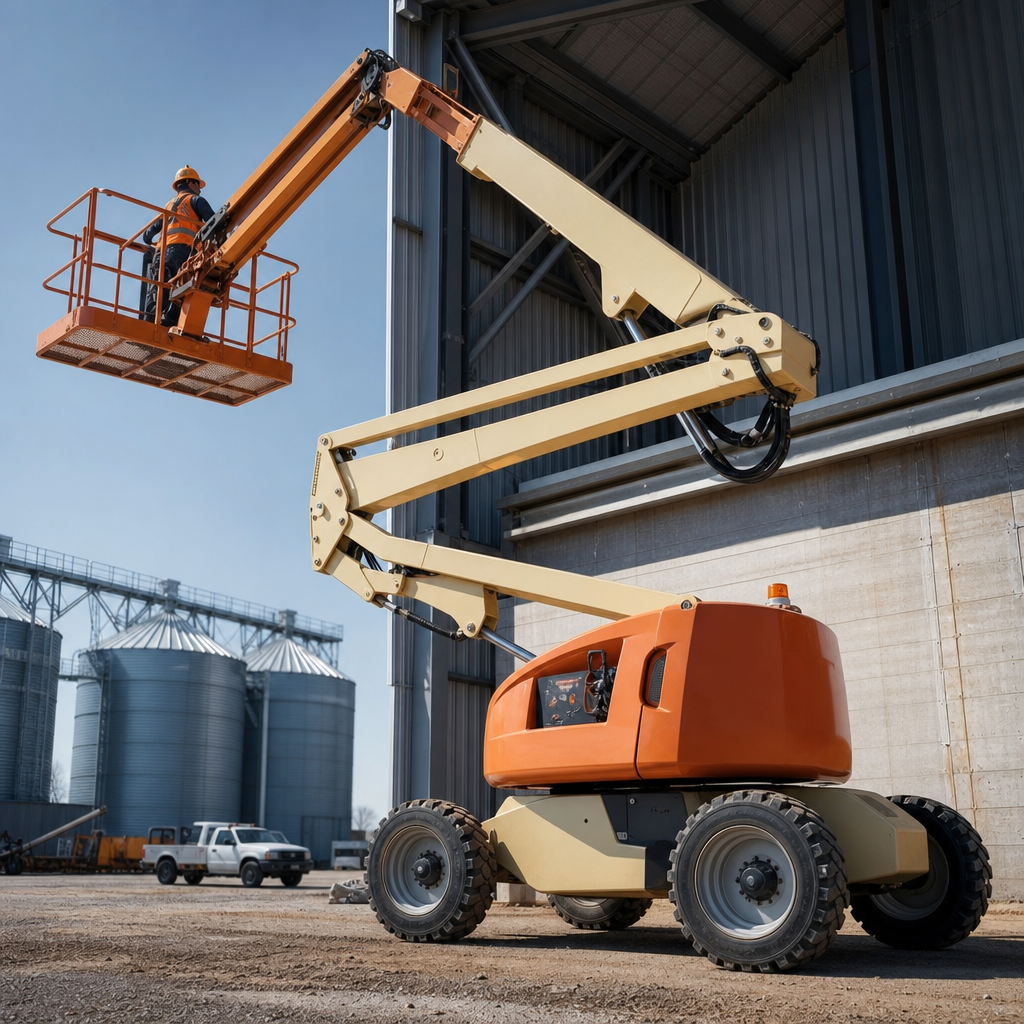
A boom lift (also called an aerial work platform or AWP) is a type of mobile elevating work platform (MEWP) that uses a hydraulic arm to position a worker basket at height. They come in two main configurations: telescopic (straight boom) and articulating (knuckle boom). Telescopic models prioritise outreach and height, while articulating models can manoeuvre over and around obstacles — making both types indispensable on South African construction, mining, and industrial maintenance sites.
South Africa's construction sector continues to grow off the back of infrastructure spend, and the demand for reliable access equipment has followed. Understanding boom lift costs sits alongside understanding the broader capital equipment market — much like when buyers research a TLB cost in South Africa before committing to a purchase.
New Boom Lift Prices in South Africa (2026)
New boom lift pricing in South Africa is heavily influenced by the Rand/USD exchange rate, import duties, and dealer margins. The major brands available locally include JLG, Genie (a Terex brand), Haulotte, and Manitou. Expect the following approximate price bands in 2026:
| Type | Working Height | Approx. New Price (ZAR) |
|---|---|---|
| Electric Articulating Boom | 12 – 16 m | R450,000 – R750,000 |
| Diesel Articulating Boom | 16 – 22 m | R750,000 – R1,300,000 |
| Telescopic Diesel Boom | 20 – 30 m | R1,100,000 – R1,900,000 |
| Large Telescopic Diesel Boom | 30 – 45 m | R1,900,000 – R2,600,000+ |
Prices above are ex-VAT estimates and will vary by dealer, specification, and any localisation or safety add-ons required by South African regulations. Always request a landed cost inclusive of VAT, delivery, and commissioning.
Used Boom Lift Prices in South Africa (2026)
The used market offers significant savings — typically 30% to 55% off new pricing — but machine age, hours, service history, and condition drive enormous variation. A well-maintained 2019 diesel articulating boom with under 2,000 hours can still command R600,000 or more, while a high-hour 2014 telescopic unit in need of refurbishment may sell for under R350,000.
Before buying used, apply the same due-diligence discipline you would to any capital plant. Our guide on how many hours is too many on used equipment is essential reading — boom lifts are generally considered high-use beyond 4,000 hours, at which point major hydraulic and structural inspections become critical.
- Compact electric articulating (used, 2018–2021): R180,000 – R420,000
- Mid-range diesel articulating (used, 2017–2021): R380,000 – R700,000
- Telescopic diesel 20–30 m (used, 2016–2021): R550,000 – R1,100,000
- Large telescopic 30 m+ (used, 2015–2020): R900,000 – R1,600,000
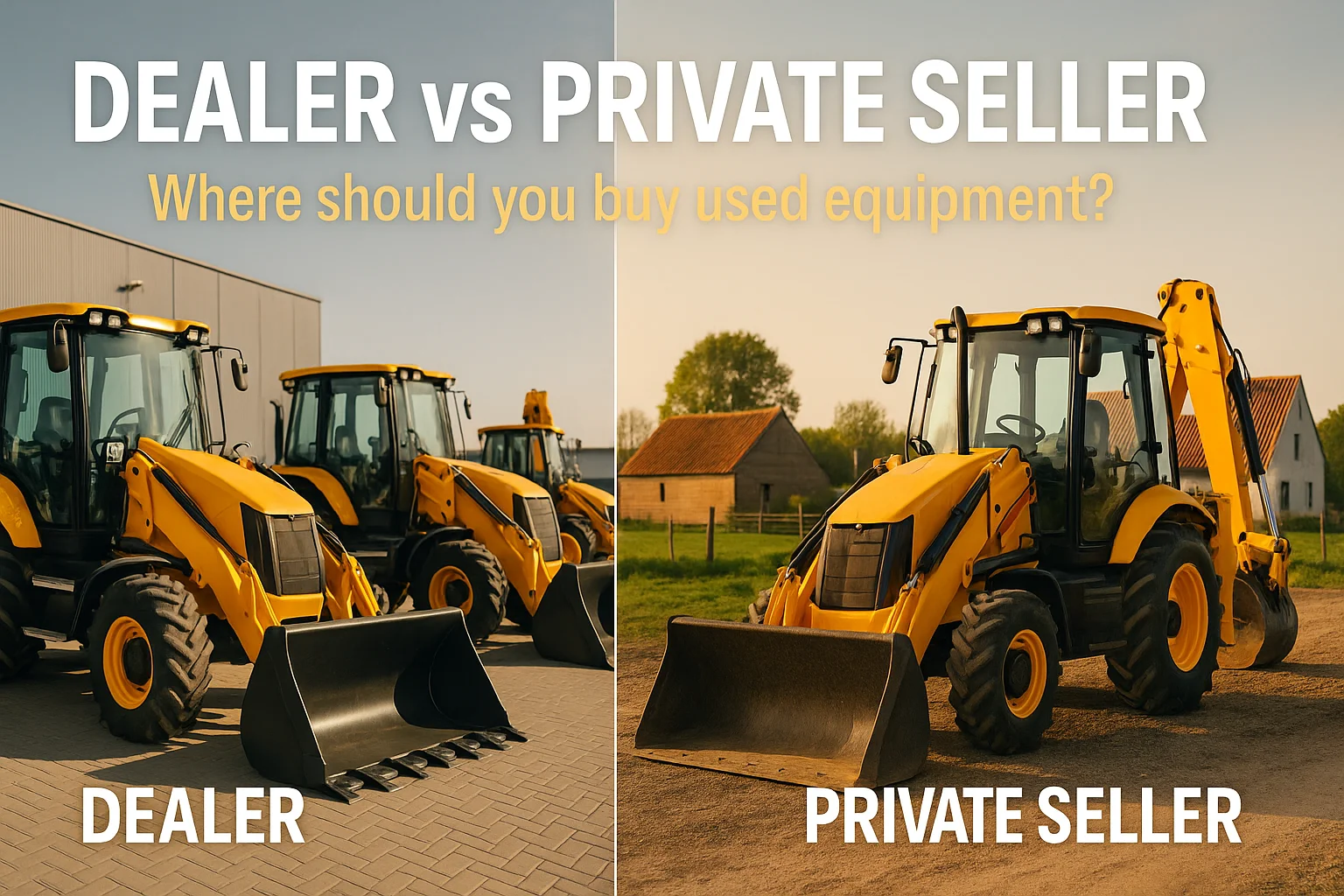
When sourcing used equipment, weigh up the merits of buying through a reputable dealer versus a private seller. Our post on dealer vs private seller for used equipment walks through the trade-offs in detail — warranty, inspection access, and after-sales support are particularly important for MEWPs, which are subject to strict safety legislation under the Occupational Health and Safety Act.
Boom Lift Rental Costs in South Africa (2026)
Rental remains the dominant access-equipment model for South African contractors who need a machine for a single project or short campaign. Typical daily and monthly rental rates in 2026 are as follows:
| Machine Type | Daily Rate (ZAR) | Monthly Rate (ZAR) |
|---|---|---|
| Electric Articulating (12–16 m) | R2,500 – R4,500 | R18,000 – R32,000 |
| Diesel Articulating (16–22 m) | R4,000 – R7,500 | R28,000 – R55,000 |
| Telescopic Diesel (20–30 m) | R6,500 – R11,000 | R45,000 – R80,000 |
| Large Telescopic (30 m+) | R10,000 – R18,000 | R70,000 – R130,000 |
Rates typically exclude transport, fuel (for diesel models), operator costs, and insurance. For projects exceeding three to four months, the economics generally shift in favour of ownership — especially if the machine will be used across multiple sites.
Boom Lifts vs Alternative Access Equipment: A Cost Comparison
Boom lifts are not always the right tool. Understanding how they compare cost-wise to alternative access solutions helps you avoid over-specifying — or under-specifying — your access equipment budget.
| Equipment Type | Typical New Price (ZAR) | Daily Rental (ZAR) | Best For |
|---|---|---|---|
| Scissor Lift (electric) | R220,000 – R550,000 | R1,200 – R3,500 | Flat indoor surfaces, vertical lift only |
| Boom Lift (articulating) | R450,000 – R1,300,000 | R2,500 – R7,500 | Outdoor, over-obstacle reach, uneven terrain |
| Telescopic Boom Lift | R1,100,000 – R2,600,000+ | R6,500 – R18,000 | Maximum height and horizontal outreach |
| Spider Lift (tracked) | R600,000 – R1,400,000 | R3,500 – R9,000 | Confined spaces, sensitive floors, steep gradients |
| Truck-Mounted Cherry Picker | R1,200,000 – R3,500,000 | R5,000 – R15,000 | Road-based work, rapid repositioning |
| Scaffolding (erected, per m²) | N/A (rental model) | R35 – R90/m²/month | Long-duration, large-area access |
The key insight: for projects under two weeks, scaffolding or scissor lifts are often cheaper. For projects requiring frequent repositioning, outdoor terrain capability, or heights above 12 m, a boom lift typically delivers the best cost-per-productive-hour ratio. The International Powered Access Federation (IPAF) publishes useful guidance on selecting the right MEWP category for specific job types.
Key Factors That Drive Boom Lift Prices in South Africa
Exchange Rate and Import Costs
South Africa manufactures very few MEWPs domestically, so virtually all boom lifts are imported. A weakening Rand directly inflates landed costs. In 2026, ongoing Rand volatility means buyers should request firm quotes with short validity windows.
Working Height and Configuration
Every additional metre of working height adds structural complexity and cost. Articulating booms command a premium over equivalent-height telescopic models because of the added knuckle joints and control systems.
Power Source
Electric boom lifts cost less to run and maintain but are limited to firm, level surfaces and have restricted outdoor use. Diesel (or dual-fuel) models are more expensive to purchase and operate but offer the versatility demanded by most South African sites.
Brand, Dealer Network, and Parts Availability
Brands with established local dealer and parts networks — JLG, Genie, Haulotte — typically hold resale value better and carry lower long-term maintenance risk. Buying a cheaper, lesser-known brand without local parts support can cost far more over a machine's life. This mirrors the logic explored in our used vs new excavator guide, where total cost of ownership often matters more than purchase price.
Maintenance Costs for Boom Lifts in South Africa
South African law requires MEWPs to undergo a thorough examination by a competent person at least every 12 months (or after any incident), in line with the OHS Act and SANS 1414. Annual maintenance and inspection budgets for boom lifts in 2026 typically look as follows:
- Routine service (fluids, filters, greasing): R8,000 – R18,000 per service interval
- Annual statutory inspection and certificate: R4,500 – R9,000
- Hydraulic repairs (seals, cylinders): R15,000 – R60,000+ depending on extent
- Tyres (foam-fill replacement): R3,500 – R8,000 per tyre
- Total annual maintenance budget (mid-range diesel boom): R35,000 – R90,000
Older machines and high-hour units will trend towards the upper end. Factor maintenance into your total cost of ownership before comparing new vs used pricing.
Financing, Resale Values, and Regional Price Variation
Financing Options
Most major South African banks and asset finance houses — including ABSA, Nedbank, Standard Bank, and WesBank — offer instalment sale or finance lease products for boom lifts. Typical terms run 36 to 60 months with deposits of 10% to 30%. Some dealers offer in-house finance or balloon payment structures. The SARB prime lending rate environment in 2026 makes it worth negotiating a fixed rate where possible.
Resale Values
Well-maintained boom lifts from reputable brands retain approximately 40% to 60% of their new value after five years, assuming moderate hours (under 3,500) and a clean service record. Machines with complete service histories and valid inspection certificates command a meaningful premium on resale — another reason meticulous record-keeping pays off. If you plan to sell, our advice on how to write an equipment listing that sells will help you maximise your return.
Regional Price Variation
Boom lift prices and rental rates are not uniform across South Africa. Gauteng and the Western Cape, as the country's largest construction markets, typically have the most competitive pricing and the widest availability of both new and used stock. KwaZulu-Natal follows closely. In more remote provinces — Limpopo, Northern Cape, North West — transport costs add R15,000 to R40,000 to delivered prices, and rental rates can be 15% to 25% higher due to limited local fleet availability. For buyers considering cross-border procurement from neighbouring markets, it is worth reviewing what AfCFTA means for cross-border equipment buyers before exploring that route.
Frequently Asked Questions
What factors affect the cost of boom lifts in South Africa?
The main factors are working height and configuration (telescopic vs articulating), power source (electric vs diesel), brand and parts availability, the Rand/USD exchange rate at time of import, machine age and hours for used units, and any South African-specific safety compliance requirements. Dealer margin and regional transport costs also play a role.
How does boom lift rental pricing compare to purchase costs in South Africa?
For short-term use (under two to three months), rental is almost always more cost-effective. A mid-range diesel articulating boom rents for roughly R28,000–R55,000 per month, while the same machine costs R750,000–R1,300,000 to buy new. The break-even point for ownership typically falls between 18 and 36 months of regular use, depending on utilisation rates and financing costs.
What are the expected maintenance costs for boom lifts in South Africa by 2026?
Budget R35,000 to R90,000 per year for a mid-range diesel boom lift, covering routine services, the mandatory annual statutory inspection, hydraulic maintenance, and tyre wear. High-hour machines and older units will trend towards the top of that range. The OHS Act requires at least annual thorough examination by a competent person.
Are there financing options available for purchasing boom lifts in South Africa?
Yes. Most major South African banks — ABSA, Nedbank, Standard Bank, and WesBank — offer asset finance, instalment sale, and finance lease products for boom lifts. Terms typically run 36 to 60 months with a 10%–30% deposit. Some dealers also offer in-house or manufacturer-backed finance. Fixed-rate deals are worth negotiating given current interest rate conditions.
What are the average resale values of boom lifts in South Africa?
A well-maintained boom lift from a recognised brand typically retains 40%–60% of its new value after five years, assuming under 3,500 hours and a complete service history. Machines with valid inspection certificates and documented maintenance records sell for noticeably more than equivalent units without paperwork. Obscure brands with no local parts support depreciate significantly faster.
How do boom lift costs vary by region within South Africa?
Gauteng and the Western Cape offer the most competitive pricing and the widest stock availability. KwaZulu-Natal is broadly similar. In more remote provinces such as Limpopo, Northern Cape, and North West, delivered prices can be R15,000–R40,000 higher due to transport, and rental rates run 15%–25% above Gauteng levels because of limited local fleet availability.
Ready to buy a boom lift?
Browse new and used boom lifts and access platforms for sale in South Africa on ACM Africa. Compare reach, power and price, then contact the seller directly on WhatsApp.
Browse boom lifts for sale →