AfCFTA — the African Continental Free Trade Area — is gradually opening up cross-border trade across 54-plus African countries, which over time should make buying equipment from another African country cheaper and simpler. But it's a phased rollout, not a switch that's already been flipped. Today you still need to factor in import duties, transport, and each country's own rules. Here's what cross-border equipment buyers actually need to know.
Whether you're a Zambian contractor eyeing a TLB in South Africa, a Namibian farmer importing a tractor, or a Kenyan dealer sourcing from Egypt, the rules of cross-border equipment buying are changing — slowly, but in your favour.

What Is AfCFTA and Why Does It Matter for Equipment Buyers?
AfCFTA stands for the African Continental Free Trade Area. It's an agreement between African Union member states to create a single continental market — and it came into force on 1 January 2021. All AU members except Eritrea have signed it, and most have ratified it.
The scale is enormous: AfCFTA aims to connect 54-plus countries and more than 1.3 billion people into one trading bloc. Its core goal is to progressively eliminate tariffs on around 90% of goods over time, alongside reducing other barriers to trade.
For equipment buyers, the significance is simple in principle: buying a machine from another African country should become cheaper and less complicated as the agreement is implemented. The direction of travel is clearly toward a more open, more connected continental market.
The honest caveat: implementation is gradual and uneven. Different countries are at different stages of operationalising AfCFTA, and many tariff lines still apply today. It's a multi-year journey, not an overnight change.
Does AfCFTA Make Equipment Cheaper to Buy Across Borders?
In principle, yes — over time — as tariffs phase down on qualifying goods. But the reality today is more nuanced.
As AfCFTA is rolled out, import duties on qualifying machinery should fall progressively, which lowers the landed cost of buying across borders. That's the long-term win. But right now, many machines still attract import duty, destination-country VAT, and clearance costs that haven't disappeared.
"The biggest change AfCFTA brings isn't an instant price cut — it's the steady removal of barriers that used to make cross-border equipment deals slow and expensive," is how we'd frame it for buyers weighing an import today.
So the practical takeaway: don't assume a machine in another country is automatically tariff-free. Check the current rates for your specific product and route with a customs broker or the destination country's revenue authority — and treat any AfCFTA saving as a bonus on top of a deal that already makes sense.
What Costs Are Involved in Buying Equipment Across an African Border?
The purchase price is only one line in the total. Here's the full picture of what goes into a cross-border equipment deal:
| Cost | What it is | Notes |
|---|---|---|
| Import duty | Tariff charged by the destination country | Varies by country and product; phasing down under AfCFTA for qualifying goods |
| VAT / sales tax | Destination-country tax on the import | Usually still applies even where duty is reduced |
| Customs clearance / broker fees | Cost of clearing the machine through customs | A good broker is worth the fee |
| Transport / freight | Moving the machine to its destination | Often the single biggest cost — AfCFTA or not |
| Insurance in transit | Cover while the machine is on the road | Strongly recommended for high-value machines |
| Inspection / compliance certificates | Required documents for some countries | Check destination rules in advance |
| Currency exchange | Cost and risk of converting currencies | Rates move — factor in a buffer |
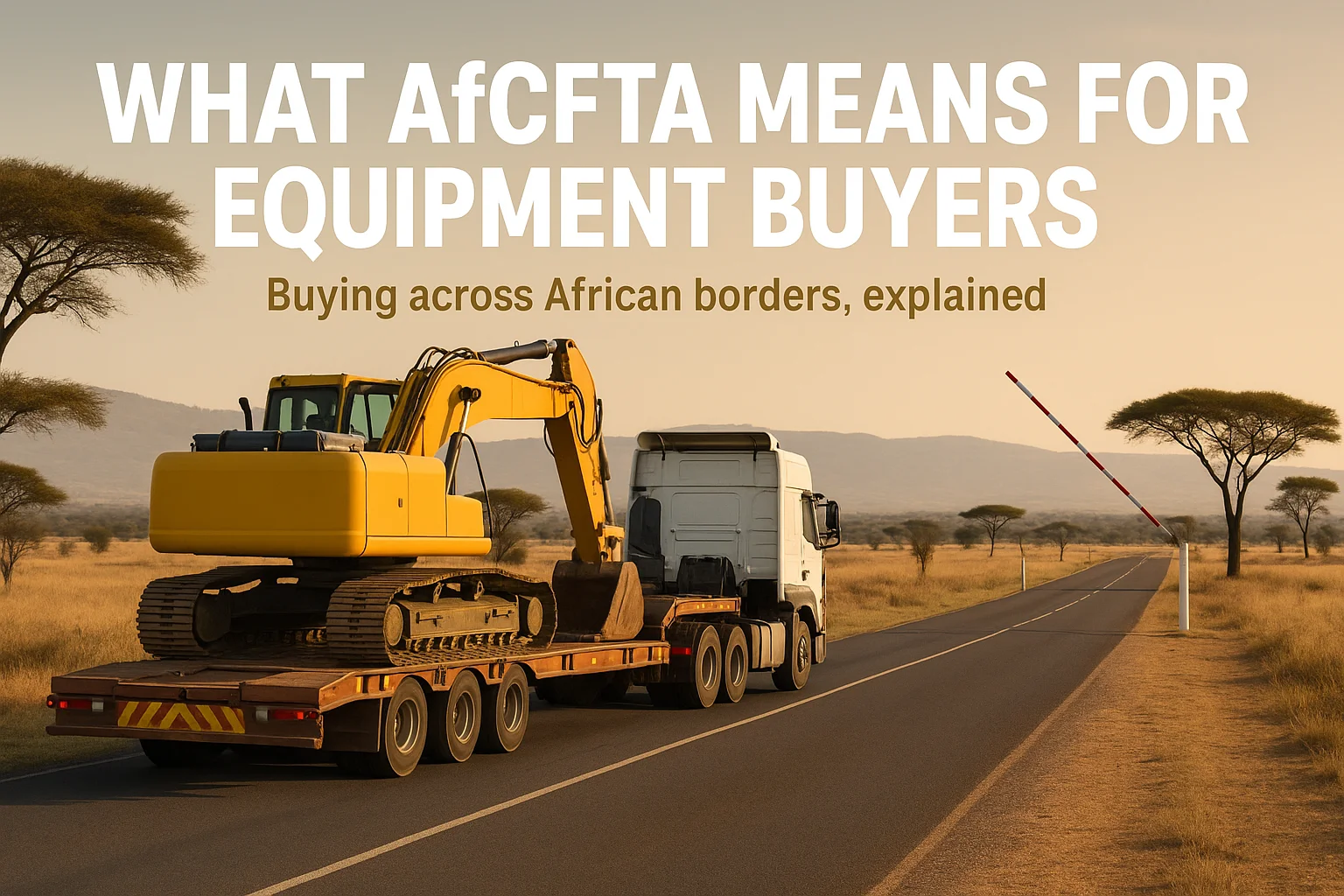
Transport is usually the largest single line item, regardless of AfCFTA. Moving a 20-ton excavator three countries away on a lowbed truck can cost a significant fraction of the machine's value. Always get the all-in landed cost before you commit, not just the sticker price.
What Are "Rules of Origin" and Why Do They Matter?
Rules of origin decide whether a machine qualifies for AfCFTA tariff preferences. In general, to get the reduced-tariff treatment, goods must qualify as originating in an AfCFTA member state — meaning they were made or substantially transformed within Africa.
This matters for equipment because a lot of machinery sold in Africa was originally manufactured elsewhere. A Japanese excavator that was landed in South Africa and is now being re-exported to Zambia may not qualify for AfCFTA preference the same way an African-made machine would. The rules can be technical.
The practical advice: if you're hoping to claim an AfCFTA tariff preference, confirm the machine's origin status with your customs broker before you buy, and make sure you can get the right certificate of origin paperwork.
Can I Buy a Used Machine From Another African Country?
Yes, in principle — but used-equipment import rules vary a lot from country to country, and this is where buyers get caught out.
Some countries apply age limits on used machinery imports. Others require pre-shipment inspections, specific compliance certificates, or apply restrictions on certain used goods. A used machine that's perfectly importable into one country may be restricted or heavily taxed in its neighbour.
Always check the destination country's specific rules for used equipment before you commit a cent. Your customs broker or the destination revenue authority is the right source.
There's also a practical reason to be extra careful buying used across a border: you can't easily return a machine that turns out to be a dud once it's cleared customs in another country. That makes a proper pre-purchase inspection even more important. Our 8-point inspection guide walks through exactly what to check — and if you can't travel to inspect, send a trusted agent or technician in your place.
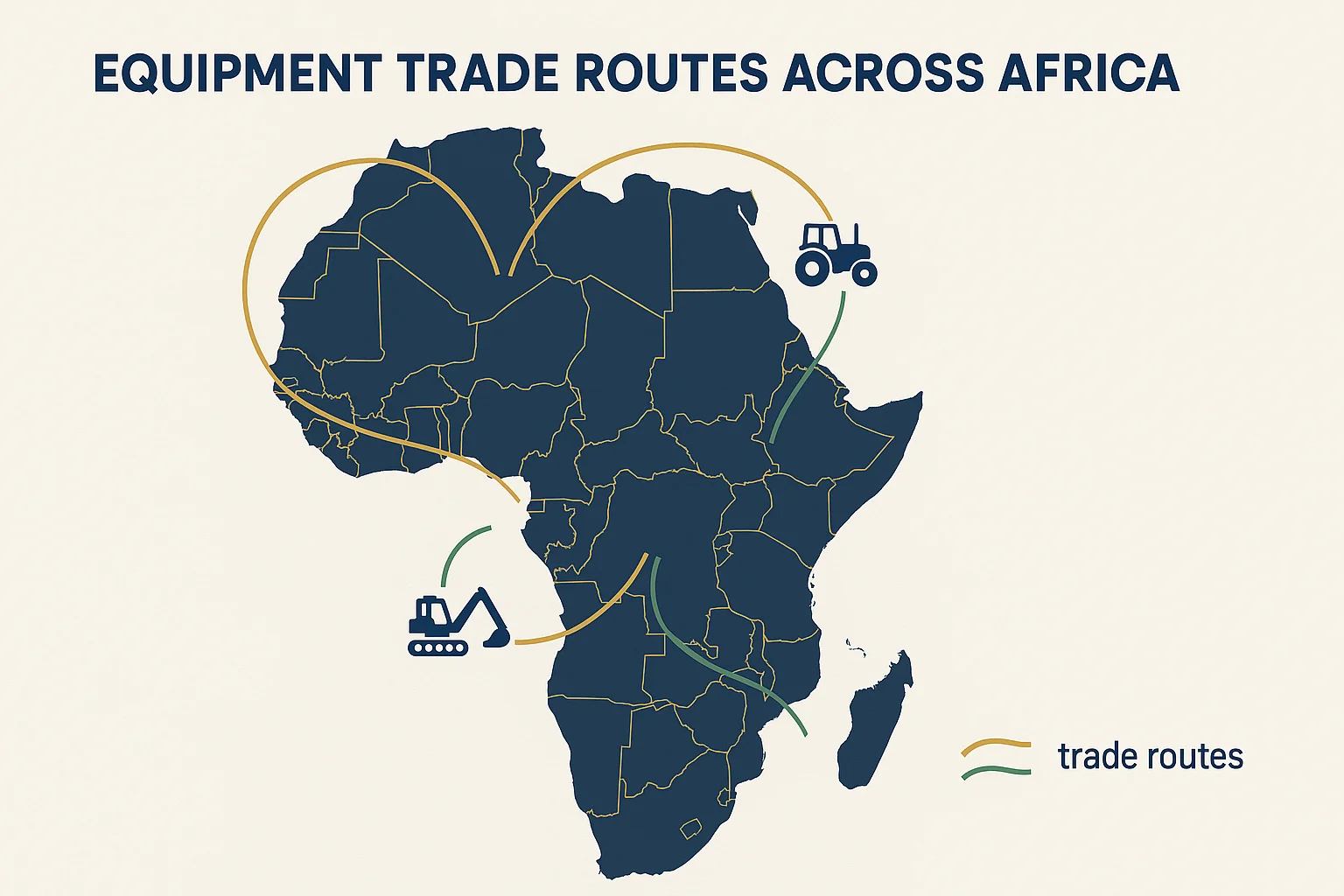
Which African Countries Are Easiest to Trade Equipment Between?
As a general rule, trading within an existing regional bloc is often the most practical starting point today — sometimes more so than relying on continent-wide AfCFTA preferences, which are still being phased in.
Africa's regional economic communities — like SADC in Southern Africa, the EAC in East Africa, COMESA across eastern and southern Africa, and ECOWAS in West Africa — already have their own free-trade arrangements. In many cases these are more operational on the ground today than the full continental agreement.
For Southern African buyers, that means intra-SADC deals — for example South Africa to Botswana, Namibia, Zambia or Zimbabwe — are often smoother than buying across regions. Shared borders, established trade corridors, and existing regional frameworks reduce friction.
This isn't a hard rule, and every deal is different. But if you're new to cross-border buying, starting within your own region is usually the gentlest introduction.
What's the Checklist Before Buying Equipment Across a Border?
Before you commit to a cross-border equipment purchase, work through this checklist:
- Confirm specs and condition. Inspect the machine yourself, or send a trusted agent or technician. Don't buy unseen.
- Get the all-in landed cost. Price plus duty plus VAT plus transport plus clearance plus insurance — the full number, not just the sticker.
- Check the destination country's import rules for that machine type, including any used-age limits or inspection requirements.
- Confirm rules of origin. If you're claiming an AfCFTA tariff preference, verify the machine qualifies and get the right certificate of origin.
- Arrange transport and insurance. Get firm quotes and confirm the machine is covered in transit.
- Use a reputable customs broker. A good broker prevents costly clearance delays and mistakes.
- Agree safe payment terms. Protect yourself against paying for a machine that never arrives.
- Get all the paperwork. Invoice, proof of origin, export documents, and any compliance certificates.
Work through every line. The deals that go wrong are almost always the ones where someone skipped a step to save time.
How Does ACM Africa Help With Cross-Border Equipment Buying?
ACM Africa is a pan-African marketplace listing agriculture, construction, and mining equipment across all 54 African countries. If you're looking to buy from another country, you can find machines wherever they're listed, see prices in local currency, and contact sellers directly via WhatsApp to discuss cross-border terms.
You can browse all listings and filter by country to see what's available in a specific market, or browse our verified dealers across the continent. Popular categories like TLBs and excavators are listed by sellers in multiple countries.
One important point: we connect buyers and sellers — we don't handle customs, logistics, duties, or finance. Those are arranged directly between the parties, or through your customs broker, freight forwarder, and bank. Think of ACM Africa as the place you find the machine and the seller; the cross-border mechanics are arranged from there.
The Bottom Line on AfCFTA and Equipment
AfCFTA is a long-term game-changer for African equipment trade. As it's implemented, buying a machine from another African country should become progressively cheaper and simpler — and that's genuinely good news for farmers, contractors, and dealers across the continent.
But it's a journey, not a switch that's already flipped. Today, you still need to do your homework: confirm the all-in landed cost, check the destination country's rules, sort out rules of origin if you're claiming a preference, inspect before you buy, and use reputable brokers.
Get those basics right and cross-border buying can open up far better machines and prices than you'd find in your home market alone. The continental market is opening — make sure you're ready to use it well.