Tipper truck prices in South Africa in 2026 range from approximately R600 000 for a used light-duty model to well over R3 million for a new, heavy tri-axle unit — and the gap between those figures is shaped by payload capacity, brand, drivetrain spec, and a rand that has been under sustained pressure. Whether you are equipping a civil construction fleet, a mining supply operation, or a smallholder aggregates business, understanding the full cost picture before you sign anything will save you significant money. This guide gives you current price benchmarks, an honest look at the economic forces pushing prices upward toward 2026, and practical advice on financing and resale.
What Is a Tipper Truck — and Why Does Specification Drive Price So Much?
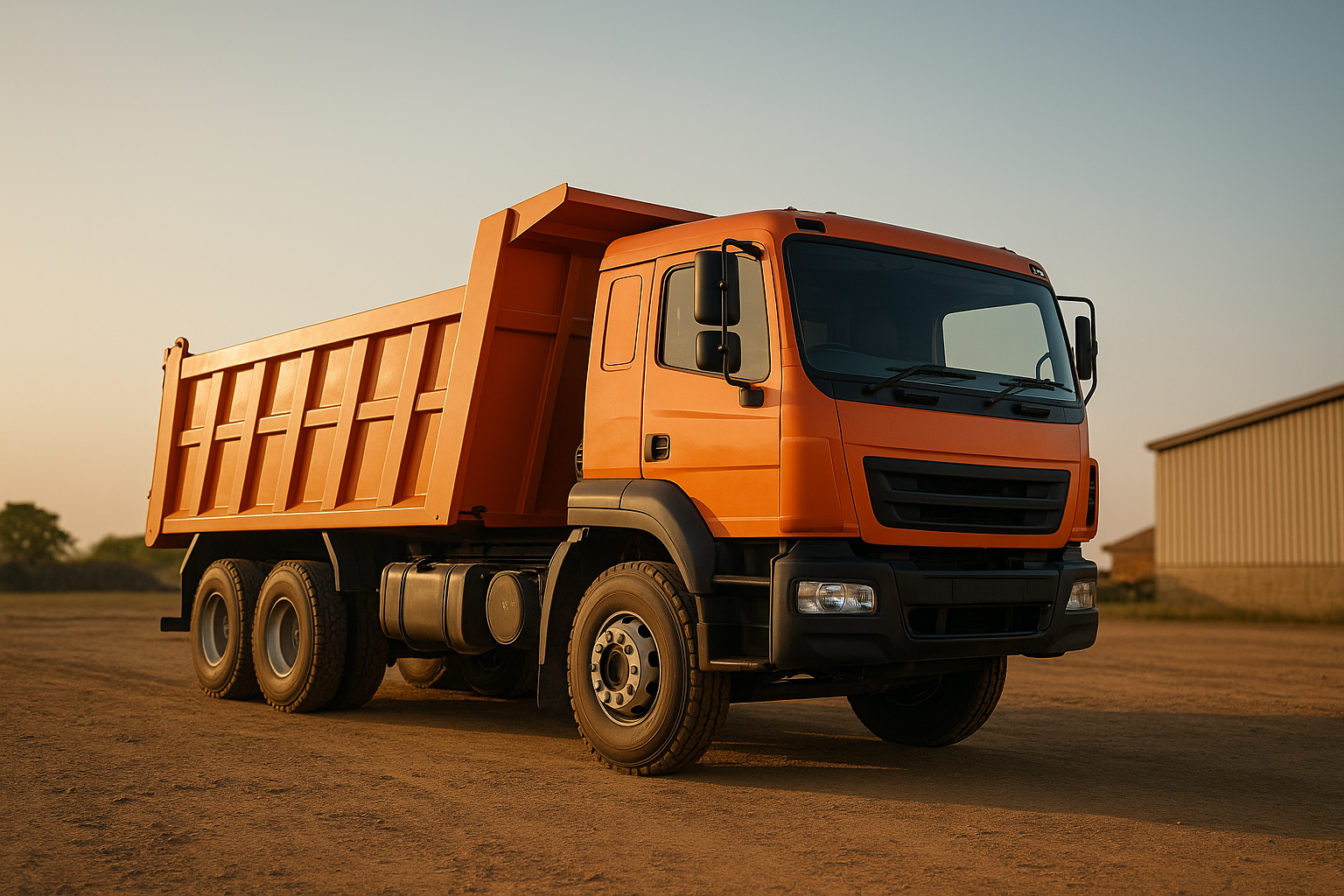
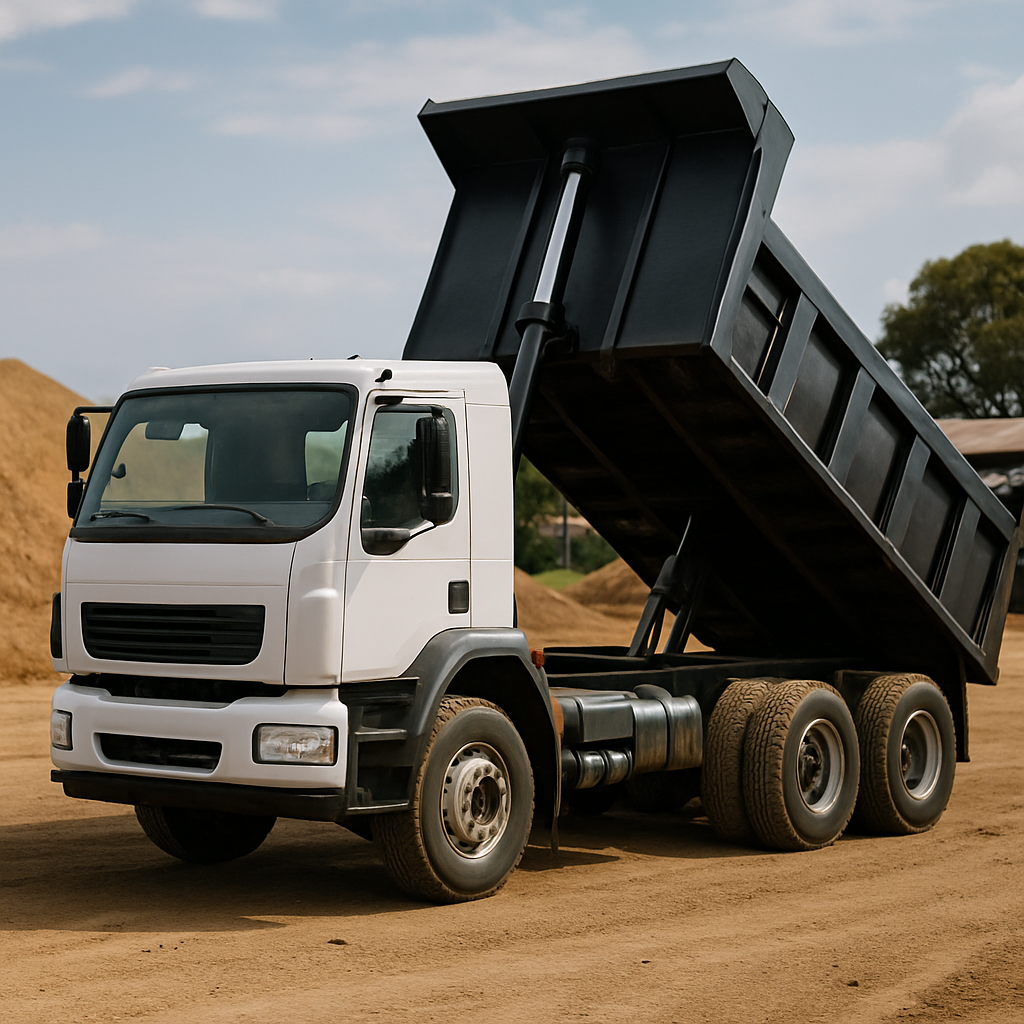
A tipper truck (also called a dump truck) is a rigid or articulated vehicle fitted with a hydraulically operated open box body that tilts to discharge loose materials — sand, gravel, ore, demolition rubble, and agricultural produce. In South Africa, tipper trucks are classified broadly by gross vehicle mass (GVM) and axle configuration, and these two variables are the single biggest determinants of purchase price.
A 6-tonne GVM light-duty tipper used on a smallholder farm or building site is an entirely different machine — mechanically and financially — from a 30-tonne tri-axle rigid used in open-cast mining. Buyers who compare only the headline price without checking payload rating, body volume, and axle configuration often end up with a truck that is either over-specified (expensive to run) or under-specified (illegal to load to the level the job demands).
2026 Tipper Truck Price Ranges in South Africa
The table below reflects realistic asking prices in the South African market for 2026, drawing on dealer listings, auction results, and import parity calculations. Prices are VAT-inclusive estimates and will vary by province, specification, and whether the unit is new or used.
| Category | GVM / Payload | New Price (approx.) | Used Price (approx.) |
|---|---|---|---|
| Light-duty tipper (single axle) | 6 – 8 t GVM | R750 000 – R1 100 000 | R600 000 – R850 000 |
| Medium-duty tipper (single axle) | 10 – 15 t GVM | R1 100 000 – R1 600 000 | R780 000 – R1 200 000 |
| Heavy-duty tipper (twin-steer / tandem) | 18 – 26 t GVM | R1 600 000 – R2 400 000 | R1 100 000 – R1 800 000 |
| Tri-axle rigid tipper | 30 – 40 t GVM | R2 400 000 – R3 200 000 | R1 600 000 – R2 400 000 |
| Articulated dump truck (ADT) | 28 – 45 t payload | R3 500 000 – R6 500 000 | R2 000 000 – R4 000 000 |
These ranges assume standard steel tipper bodies. Alloy-body trucks, those fitted with tailgate spreaders, or units configured for hazardous materials will attract a premium of 10 – 25 % on top of the base price. For a useful parallel on how price brackets work across heavy equipment categories, see our 2026 TLB cost guide for South Africa.

How Inflation and Economic Trends Are Shaping 2026 Prices
South Africa's tipper truck market does not operate in isolation. Several macro-economic forces are converging to push prices higher in 2026, and buyers who ignore them risk being caught off-guard when they return to the market for a second or third unit.
Rand Weakness and Import Parity
The overwhelming majority of heavy trucks sold in South Africa — Volvo, Mercedes-Benz Trucks, MAN, Scania, FAW, Sinotruk, Powerstar — are either fully imported or assembled from imported components. When the rand weakens against the US dollar or euro, the landed cost of those vehicles rises almost immediately, and manufacturers pass the increase on within one to two model-year cycles. The South African Reserve Bank has flagged persistent rand volatility as a medium-term risk, and most industry forecasters expect the currency to remain under pressure through 2026.
Steel and Commodity Input Costs
Tipper bodies are fabricated from high-strength steel. Global steel prices — influenced by Chinese production policy, energy costs, and post-COVID supply-chain normalisation — have remained elevated relative to pre-2020 benchmarks. Local body builders have absorbed some of this through improved manufacturing efficiency, but the structural cost floor for a new tipper body is meaningfully higher in 2026 than it was five years ago.
Fuel and Operating Cost Pass-Through
High diesel prices increase the total cost of ownership for tipper operators, which in turn depresses demand for new units and supports stronger residual values on fuel-efficient used trucks. Buyers in 2026 should model fuel consumption carefully — a 10 % difference in litres per 100 km between two similarly priced trucks can represent hundreds of thousands of rands over a five-year ownership cycle.
Infrastructure Spend and Demand Pull
South Africa's government has committed to accelerated infrastructure investment under the Infrastructure South Africa programme. Road rehabilitation, housing, and energy projects all require aggregate haulage, which sustains demand for tippers and keeps resale values firm. The broader continental picture — shaped by frameworks like AfCFTA cross-border equipment trade — also opens new export markets for used South African tippers, further supporting local residual values.
Leading Brands and Their Value Positioning in 2026
Brand choice has a significant bearing on both purchase price and total cost of ownership. Here is how the main players sit in the South African market heading into 2026:
- Volvo Trucks & Scania — Premium European brands with the highest new-unit prices (R2.2 m – R3.5 m for a 30 t rigid) but strong residual values, excellent dealer networks, and low downtime records. Preferred by large fleet operators and mining contractors.
- Mercedes-Benz Trucks (Actros / Arocs) — Competitive on spec and aftersales support; Arocs range is purpose-built for construction tipping duty. Prices sit just below Volvo/Scania.
- MAN TGS — Well-regarded for durability on South African roads; strong parts availability through Motus Truck & Bus.
- FAW, Sinotruk (HOWO), Powerstar — Chinese-origin brands that have captured a growing share of the medium and heavy tipper market on price. A new FAW 30.340FT tri-axle tipper can be sourced for R1.6 m – R2.0 m — a significant saving over European equivalents. Parts availability has improved markedly, though resale values remain lower than European brands.
- Tata, Ashok Leyland — Competitive in the 10 – 18 t segment; popular with smaller contractors and emerging fleet owners.
When evaluating used units across these brands, the same principles apply as for any heavy equipment purchase — hours and condition matter enormously. Our guide on how many hours is too many on used equipment is worth reading before you inspect any high-mileage tipper.
Hidden and Additional Costs Buyers Often Overlook
The sticker price of a tipper truck is only the beginning. Budget for the following additional costs:
- Registration and licensing — GVM-based operating licence fees, roadworthy certificate, and cross-border permits if the truck will work in neighbouring SADC states.
- Insurance — Commercial vehicle insurance for a 30 t tipper can run R8 000 – R18 000 per month depending on use, driver record, and cover level.
- Tyres — A full set of drive and steer tyres for a heavy tipper costs R80 000 – R150 000 and may need replacement every 80 000 – 120 000 km under hard quarry use.
- Scheduled maintenance — Budget R2 500 – R6 000 per month for servicing, filters, and consumables on a medium-to-heavy unit in active use.
- Body repairs and liner replacement — High-abrasion loads (granite, ore) wear tipper bodies quickly; a steel liner replacement can cost R25 000 – R60 000.
- Financing costs — At current prime-linked rates, a R2 million truck financed over 60 months with a 10 % deposit will attract monthly repayments in the region of R40 000 – R48 000 before insurance.
For buyers weighing new versus used, the same cost-benefit logic explored in our used vs new excavator guide applies equally well to tippers — a well-maintained used unit from a reputable dealer often delivers the best risk-adjusted return.
Financing Options for Tipper Trucks in 2026
South African buyers have several financing routes available:
- Instalment sale (hire purchase) — The most common route; the buyer takes ownership on settlement. Banks such as ABSA, Standard Bank, WesBank, and Nedbank all offer commercial vehicle finance with terms of 24 – 72 months.
- Finance lease — The financier retains ownership; the operator pays a fixed monthly rental and has the option to purchase at residual value. Useful for preserving working capital.
- Operating lease / full maintenance lease (FML) — Monthly payment covers depreciation, maintenance, and tyres. Higher monthly cost but predictable cash flow — popular with large fleet operators.
- Rental-to-own — Offered by some dealers and rental companies; useful for contractors who need a truck immediately but want to preserve credit lines.
- SEFA and IDC funding — The Small Enterprise Finance Agency (SEFA) and the Industrial Development Corporation offer development finance for qualifying SMMEs, often at concessional rates.
Whichever route you choose, compare the total cost of finance (TCF) — not just the monthly repayment — and factor in balloon payments, residual values, and early settlement penalties before signing.
Dealer vs Private Seller: Where to Buy Your Tipper
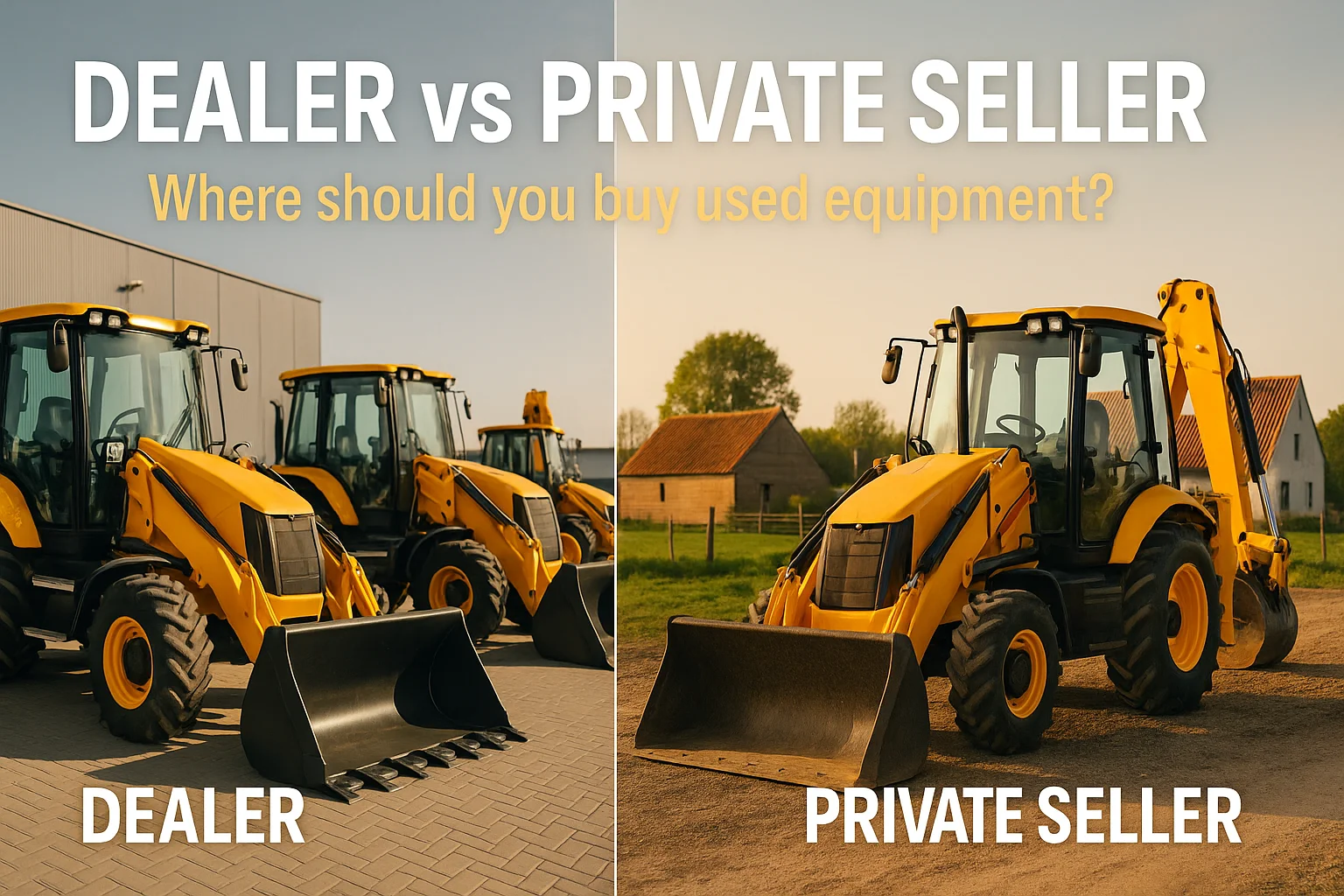
The sourcing channel matters as much as the price. Buying from a reputable dealer gives you access to inspection reports, service histories, warranty options, and finance facilitation — all of which reduce risk on a high-value asset. Private sellers may offer lower asking prices, but the due-diligence burden falls entirely on you. Our detailed breakdown of the dealer vs private seller decision for used equipment covers this trade-off in depth and is essential reading before you commit to either route.
Frequently Asked Questions
What are the expected trends in tipper truck prices leading up to 2026?
Tipper truck prices in South Africa are expected to continue rising moderately through 2026, driven by rand weakness, elevated steel costs, and strong infrastructure-led demand. European-brand new units are likely to see price increases of 6 – 10 % year-on-year, while Chinese-brand units may hold more competitive price points as local assembly and parts networks mature. Used truck values are also expected to remain firm due to sustained demand and constrained new-vehicle supply.
How do economic factors influence the pricing of tipper trucks in South Africa?
The primary economic drivers are rand/dollar exchange rate movements (most trucks are imported or have imported components), global steel prices (which affect body fabrication costs), domestic fuel prices (which influence total cost of ownership and therefore demand), and infrastructure spending levels (which drive demand and support residual values). Interest rate cycles also affect monthly financing costs, making affordability sensitive to SARB monetary policy decisions.
What are the best financing options available for purchasing a tipper truck in 2026?
Instalment sale agreements through major banks (WesBank, ABSA, Standard Bank, Nedbank) remain the most accessible option for most buyers. SMMEs should also investigate SEFA and IDC development finance, which can offer lower interest rates for qualifying businesses. For larger fleets, a full maintenance lease provides cost predictability. Always compare the total cost of finance across at least three lenders before committing.
Which brands are anticipated to offer the best value for tipper trucks in 2026?
For outright purchase price, FAW and Sinotruk (HOWO) continue to offer the most competitive entry points in the medium and heavy segments. For total cost of ownership and resale value, Volvo and Scania remain the benchmark. MAN and Mercedes-Benz Trucks (Arocs) offer a strong middle ground. Buyers who prioritise low acquisition cost and can manage parts sourcing themselves may find Chinese-brand trucks increasingly attractive as dealer networks expand.
What additional costs should buyers consider when purchasing a tipper truck?
Beyond the purchase price, buyers should budget for registration and operating licences, commercial insurance (R8 000 – R18 000/month for a heavy unit), a full tyre set (R80 000 – R150 000), scheduled maintenance (R2 500 – R6 000/month), body liner replacement, and financing costs. For cross-border operators, SADC transit permits and cross-border road charges add further expense. Total annual running costs can equal 20 – 35 % of the purchase price on a heavily utilised unit.
How does the resale value of tipper trucks change over time in South Africa?
Tipper trucks depreciate at roughly 15 – 25 % per year in the early years, slowing as the unit reaches mid-life. European-brand tippers (Volvo, Scania, MAN) hold value better than Chinese-brand units, primarily due to stronger buyer confidence and established parts networks. A well-maintained Volvo FMX or Scania G-series tipper can retain 40 – 55 % of its new price after five years. High mileage, body damage, and deferred maintenance accelerate depreciation significantly. Strong infrastructure demand in South Africa is expected to keep used tipper values relatively firm through 2026.
Ready to buy a tipper truck?
Browse new and used tipper and dump trucks for sale in South Africa on ACM Africa. Compare specs and prices, then contact the seller directly on WhatsApp.
Browse tipper & dump trucks →