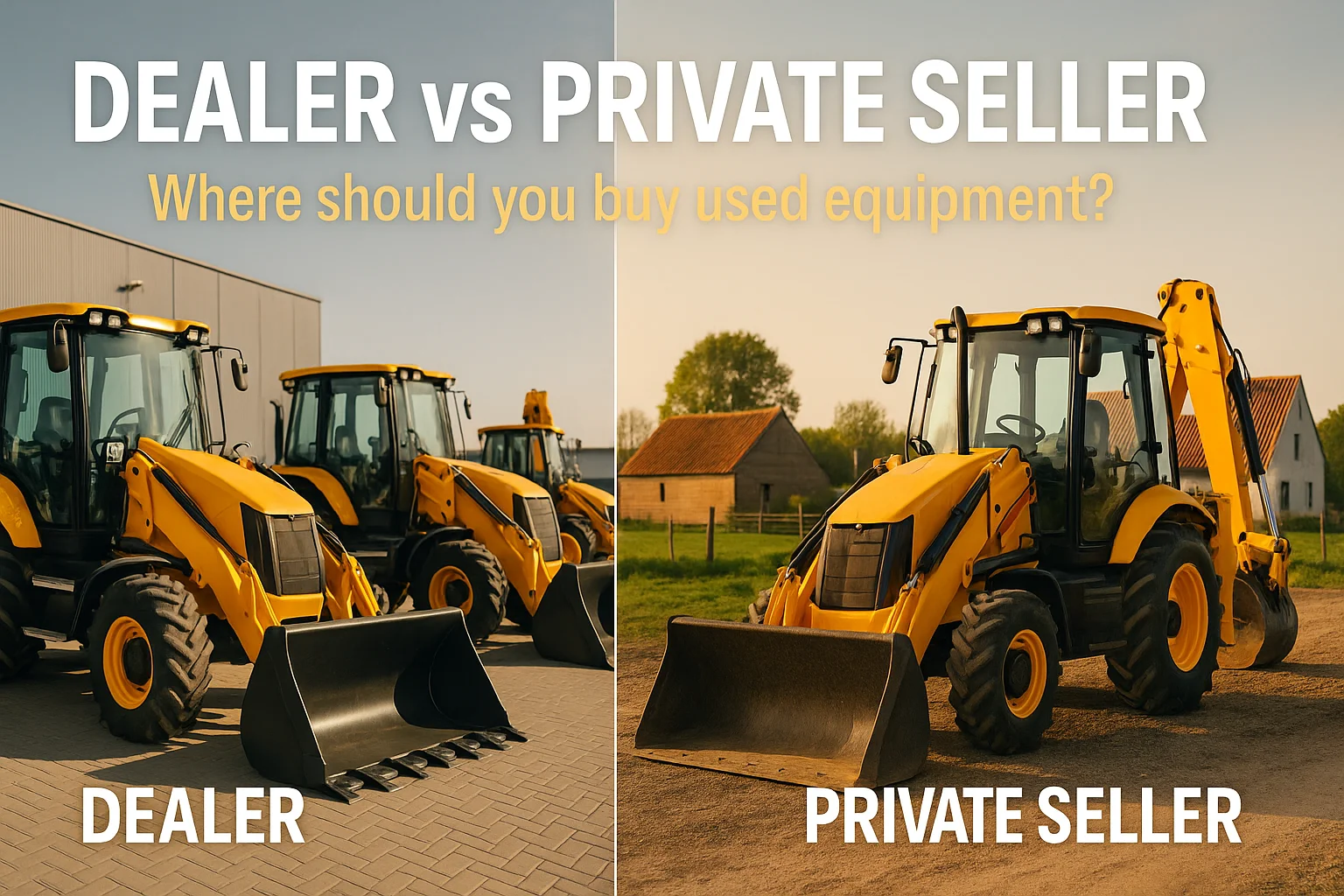
Buying used equipment comes down to two routes: a dealer or a private seller. Dealers cost a little more but offer warranty, recourse, and often finance. Private sellers are usually cheaper and give you direct access to the machine's history — but you carry all the risk. This guide explains when each route makes sense, so you can match the choice to your budget, your experience, and how much risk you're comfortable with.
There's no universally right answer. The same machine bought two different ways suits two different buyers. Let's break down the real trade-offs.

Dealer vs Private Seller: Which Should You Buy From?
The short answer: buy from a dealer if you want peace of mind, warranty, recourse, or finance. Buy from a private seller if you want the lowest cash price and you can inspect the machine yourself.
Here's the quick decision summary:
- First-time buyer: Lean dealer — the warranty and recourse are worth the premium while you're learning.
- Financing the purchase: Lean dealer — they have finance relationships and clean paperwork.
- Experienced cash buyer: Private sale can be the better deal if you can assess condition.
- Want the absolute lowest price: Lean private — no dealer margin.
- Want a warranty and after-sales support: Dealer, every time.
What Are the Advantages of Buying From a Dealer?
A dealer charges more, but you get a lot for that premium. The main advantages:
- Warranty. New machines come with manufacturer warranty, and many dealers offer a limited warranty on used stock too.
- Recourse. If something goes wrong shortly after purchase, you have a business to go back to.
- A reputation to protect. A verified dealer relies on repeat custom and referrals, so they have a real incentive to deal fairly.
- Inspected or refurbished stock. Many dealers check, service, and refurbish machines before selling.
- Finance options. Dealers usually have relationships with asset financiers, making a financed purchase faster and easier.
- After-sales support and parts. Especially valuable on brands where you'll need ongoing spares.
- Choice and trade-in. Multiple machines to compare, and often the option to trade your old unit in.
On ACM Africa, dealers carry a Verified Dealer badge on their profile and listings, so you can see at a glance whether you're dealing with an established business.
What Are the Advantages of Buying From a Private Seller?
Private sellers win on price and on history. The main advantages:
- Lower price. No dealer margin means the asking price is usually lower for an equivalent machine.
- Direct access to the owner. You're talking to the person who actually used the machine, not a middleman.
- The full story. A good private seller knows every quirk — when it was serviced, what's been replaced, how hard it worked.
- Room to negotiate. Private sellers are often more flexible than a dealer working to a margin.
- Genuine bargains. A well-kept machine from a careful owner can be the best value on the market — if you can recognise it.
"The best private deals come from owners who looked after their machine and kept the records. The worst come from sellers offloading a problem. Your job as a buyer is to tell the two apart," is the lens we'd apply to any private sale.
What Are the Risks of Each?
Both routes carry risk — they're just different risks.
Dealer risks
- You pay more. The premium is real, even if it buys you peace of mind.
- Occasionally thin knowledge. Some dealers are flippers who don't know the deep history of a specific machine. Ask how long they've had it and where it came from.
Private seller risks
- No warranty. Any fault after purchase is your bill.
- No recourse. Once the money's transferred, you're on your own.
- Unknown history. If records are thin, you're partly guessing.
- Payment safety. Sending money to a stranger carries its own risk.
- Someone else's problem. The cheapest machines are sometimes cheap for a reason.
The good news: every private-seller risk is manageable with a proper inspection, an ownership check, and safe payment. The buyers who get caught are almost always the ones who skipped those steps.
How Much Cheaper Is a Private Sale, Really?
Private sales are typically cheaper than a dealer for an equivalent machine — industry estimates suggest somewhere around 10–15% less, since you're not paying a dealer's margin or warranty cost.
But here's the catch: that saving evaporates the moment you inherit a hidden fault with no recourse. A private TLB that's R60,000 cheaper than the dealer equivalent isn't cheaper if it needs a R90,000 hydraulic rebuild three months in. With a dealer, that might have been a warranty claim; with a private sale, it's your problem.
So net it out honestly. The private saving is real on a sound machine. On a machine with undisclosed problems, the dealer's premium would have been the cheaper option all along. This is exactly why inspection matters more on a private sale than anywhere else.
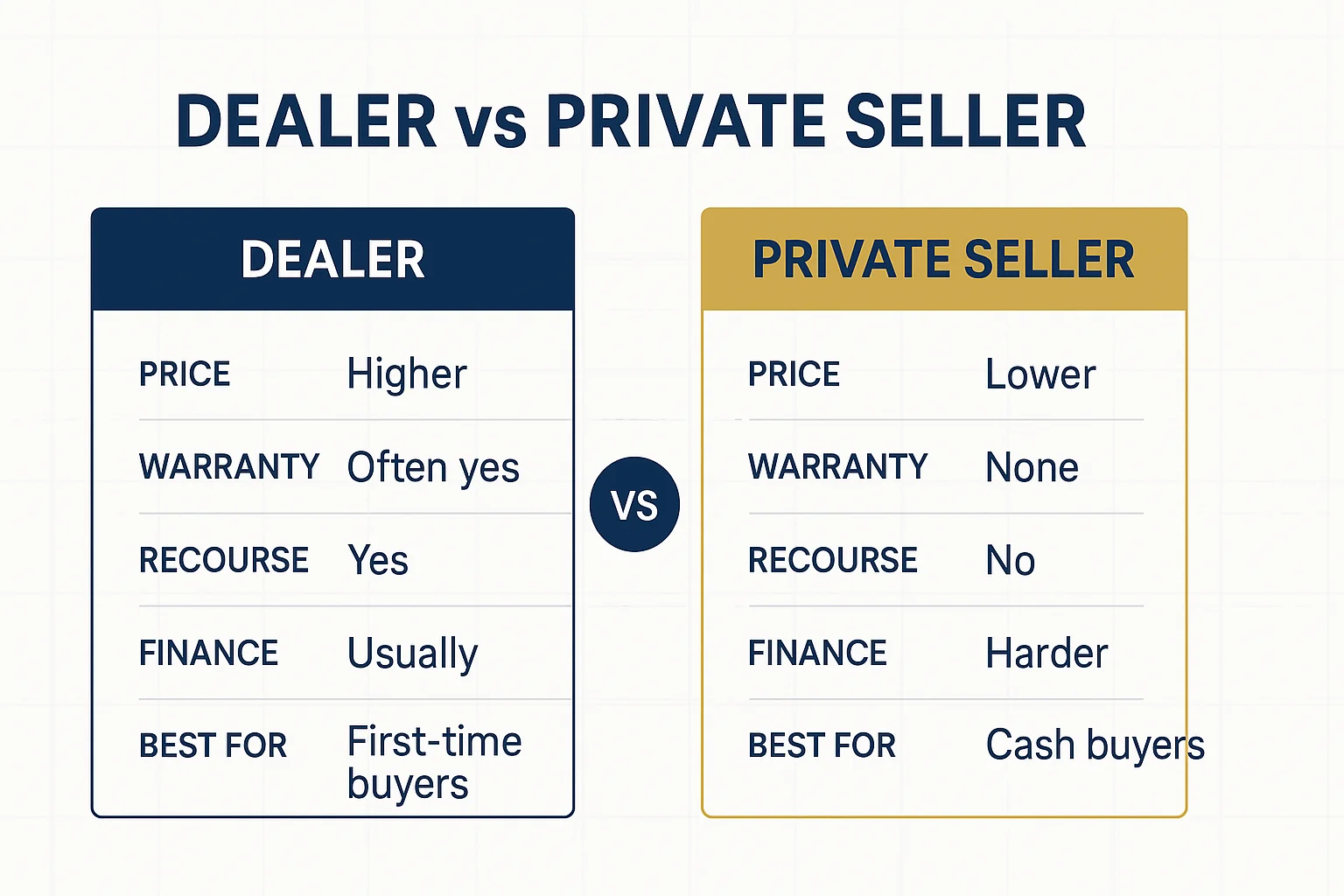
Dealer vs Private Seller: At a Glance
| Factor | Dealer | Private Seller |
|---|---|---|
| Price | Higher | Usually lower (~10–15%) |
| Warranty | Often available | None |
| Recourse if it fails | Yes | No |
| Finance options | Usually | Harder to arrange |
| Machine history | Sometimes limited | Direct from owner |
| After-sales support | Yes | No |
| Best for | First-time and financed buyers | Experienced cash buyers |
How Do You Stay Safe Buying From a Private Seller?
A private sale is perfectly safe if you follow the right steps. Work through this checklist before any money changes hands:
- Inspect thoroughly, or bring someone who can. This is non-negotiable on a private sale. Our 8-point inspection guide walks through exactly what to check.
- Verify the seller owns the machine. Match the chassis number on the machine to the papers and invoice.
- Check for outstanding finance. A machine with money still owed on it can be repossessed from you.
- Never pay a full deposit before inspecting. Be very wary of any seller pushing for money before you've seen the machine.
- Use safe, traceable payment. Avoid cash for large amounts; use a method that leaves a record.
- Get a signed invoice. With both parties' details, the machine's details, and the price.
- Meet at the machine's real location. Inspect it where it actually lives and works, not a random meeting point.
Check the hours against the wear, too — our guide on how many hours is too many helps you judge whether the meter reading matches the machine's real condition.
When Does a First-Time Buyer Benefit Most From a Dealer?
If you can't confidently assess a used machine yourself, a dealer is almost always the right call.
Think of the dealer's premium as an insurance policy. When you don't yet have the eye to spot a tired hydraulic system or a wound-back hour meter, the warranty and recourse a dealer offers are worth paying for. They cover the gap in your own experience.
As you buy more machines and learn what to look for, that gap closes — and private sales become steadily lower-risk for you. Many experienced buyers start at dealers and move toward private sales as their confidence grows. There's no shame in paying for peace of mind while you learn.
How Does ACM Africa Help With Both?
ACM Africa lists both verified dealers and private sellers side by side, so you can compare the same machine from both routes. Dealers carry a Verified Dealer badge, every seller has a public profile, and you contact either directly via WhatsApp to ask questions and arrange a viewing.
You can browse verified dealers specifically if you want the dealer route, or browse all listings to see dealer and private stock together. Popular categories like TLBs have both.
One important point: we're a marketplace that connects buyers and sellers — we don't broker the transaction. Whether you buy from a dealer or a private seller, the inspection and the payment safety steps are on you. That's true on any marketplace, which is why the checklist above matters regardless of which route you choose.
The Bottom Line: Dealer or Private?
Match the choice to your experience, budget, and risk appetite.
Choose a dealer for warranty, recourse, finance, and peace of mind — especially as a first-time or financed buyer. Choose a private seller for the best cash price and direct owner history — if you can inspect the machine and verify ownership yourself.
Whichever route you take, the golden rule is the same: inspect before you pay, and confirm the seller owns what they're selling. Do that, and both routes can land you a great machine at a fair price.