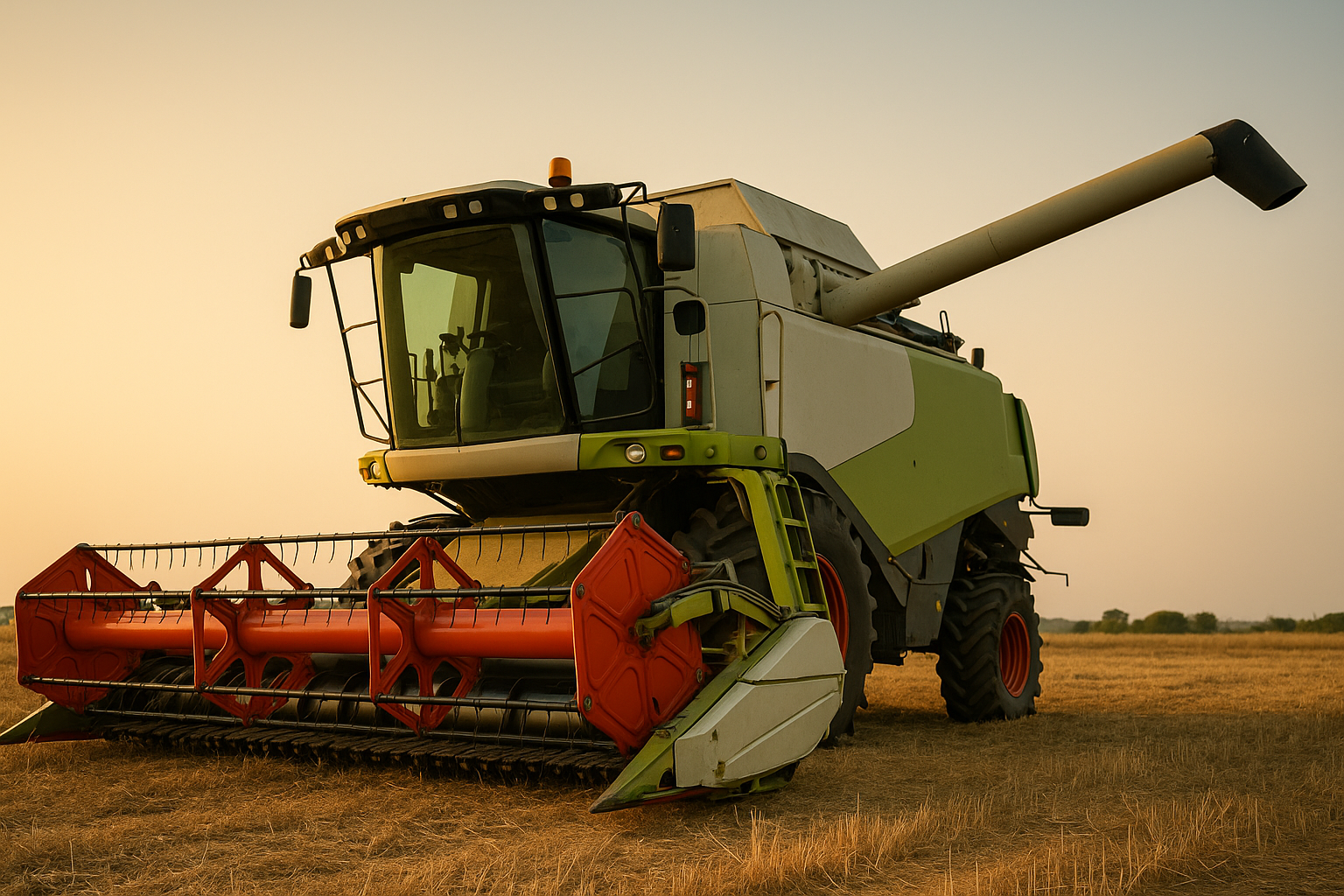
Combine harvester prices in South Africa range from roughly R1.5 million for a used entry-level machine to well over R12 million for a flagship new model — and the gap between those figures is shaped by brand, header size, engine output, condition, and how you choose to finance the purchase. Whether you are a commercial grain farmer in the Free State or a smallholder scaling up in KwaZulu-Natal, understanding the full cost picture before you sign anything is essential.
New Combine Harvester Prices in South Africa (2026)
Brand-new combines sourced through authorised dealers carry the highest sticker prices but come with full manufacturer warranties, the latest precision-farming technology, and access to official service networks. Prices quoted below are indicative ex-VAT retail figures based on current dealer listings and exchange-rate-adjusted import costs for 2026. Always request a formal quotation because the rand–dollar and rand–euro exchange rate can shift prices meaningfully within a single season.
| Segment | Typical Models | Est. Price Range (excl. VAT) |
|---|---|---|
| Entry-level (new) | John Deere S660, Case IH Axial-Flow 150 | R3.8m – R5.5m |
| Mid-range (new) | New Holland CR8.90, Claas Lexion 6700 | R6m – R8.5m |
| High-capacity (new) | John Deere X9 1000, Case IH AF9250 | R9m – R12.5m+ |
| Used (all segments) | Various brands, 1 000 – 4 500 engine hours | R1.5m – R6m |
Header attachments — maize, wheat, sunflower, or soya bean headers — are often quoted separately and can add R400 000 to R1.2 million to the total, depending on width and brand. Always confirm whether the listed price includes a header before comparing quotes.
What Drives the Price of a Combine Harvester?
Several variables push the final price up or down. Understanding them helps you negotiate more effectively and avoid overpaying for capacity you do not need.
- Engine power and throughput capacity — larger engines and wider threshing systems command premium pricing.
- Rotor type — axial-flow rotary designs (e.g. Case IH, New Holland CR) typically cost more than conventional straw-walker machines but offer higher throughput on maize and soya.
- Technology package — GPS auto-steering, yield mapping, moisture sensors, and telematics connectivity all add to the base price.
- Header width and crop type — wider draper and flex headers cost significantly more than standard rigid grain headers.
- Condition and hours (used machines) — as explored in our guide on how many hours is too many on used equipment, engine hours are only one part of the picture; rotor, separator, and cleaning-system hours matter just as much on a combine.
- Import duties and exchange rate — South Africa currently levies customs duties on imported agricultural machinery; a weakening rand raises landed cost quickly.
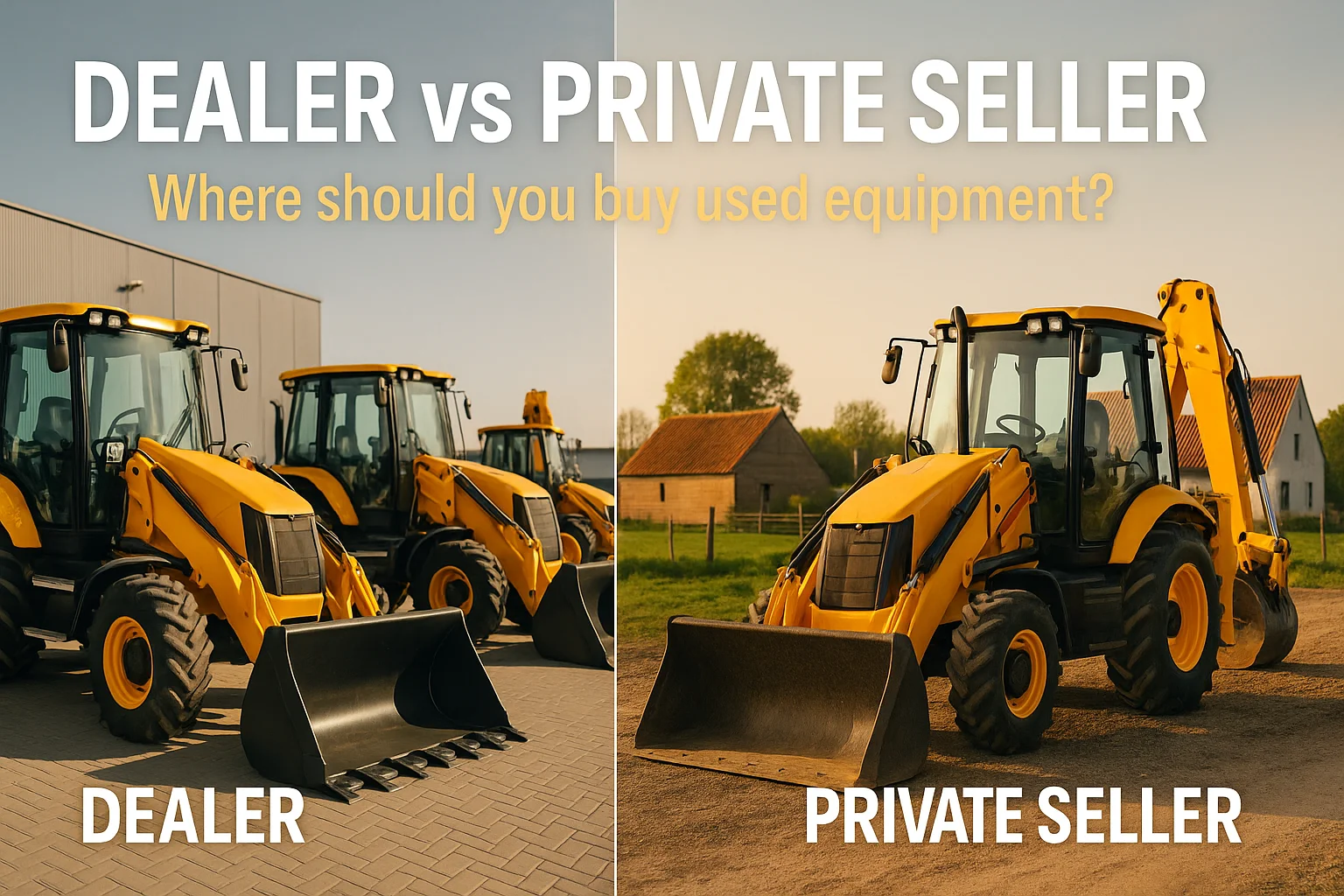
- Dealer vs private seller — buying privately can save 10–20 % upfront but carries higher risk; read our breakdown of dealer vs private seller: where should you buy used equipment before deciding.
Financing Options and Their Real Impact on Affordability
Very few South African farmers purchase a combine harvester outright. Financing is the norm, and the structure of that financing has a dramatic effect on what the machine actually costs you over its working life.
Common Financing Routes
- Instalment sale (hire purchase) — the most common route through Land Bank, ABSA AgriBusiness, Nedbank Agri, and Standard Bank. Deposit requirements typically range from 10–30 %, with repayment terms of 36 to 60 months.
- Operating lease — you pay a monthly rental and return the machine at lease end; useful for contractors who want to avoid residual-value risk.
- Finance lease — similar to hire purchase but ownership transfers at the end of the term; VAT vendors can often claim input VAT on lease payments.
- Land Bank seasonal finance — Land Bank offers production-loan facilities that can be structured to cover equipment acquisition alongside seasonal input costs.
- Manufacturer finance schemes — John Deere Financial, CNH Industrial Capital, and AGCO Finance all operate in South Africa and sometimes offer promotional rates at key agricultural shows.
At a prime lending rate of approximately 11.25 % (mid-2025), a R5 million combine financed over 48 months at prime plus 2 % with a 20 % deposit will cost you roughly R1.4 million in interest alone over the term — a figure that rivals the cost of a second-hand entry-level machine. Structuring a larger deposit or a shorter term can reduce this substantially.
Total Cost of Ownership: Beyond the Purchase Price
The purchase price is only the beginning. South African grain farmers consistently report that annual operating costs can equal 15–25 % of the machine's replacement value. A realistic total cost of ownership (TCO) model should include the following:
| Cost Category | Typical Annual Estimate |
|---|---|
| Scheduled servicing and filters | R80 000 – R200 000 |
| Wear parts (concaves, sieves, belts, chains) | R150 000 – R400 000 |
| Tyres (replacement cycle ~5 years) | R30 000 – R80 000 p.a. amortised |
| Insurance | R60 000 – R180 000 |
| Fuel (diesel, per season) | R120 000 – R350 000 |
| Operator labour | R80 000 – R200 000 |
Manufacturers such as John Deere and Case IH publish recommended service intervals and genuine parts pricing — always use these as a baseline when budgeting, rather than assuming aftermarket parts will always be cheaper or available.
Resale Value and What Affects It
Combine harvesters depreciate steeply in the first three years — typically losing 20–35 % of their new value — and then depreciate more gradually. Factors that protect resale value in the South African market include a full dealer service history, low rotor hours relative to engine hours, original paintwork, and availability of local parts support for the brand. Less common brands imported without a local dealer network can be extremely difficult to sell at a fair price.
If you are considering cross-border purchase of a machine from Zambia, Zimbabwe, or Mozambique, be aware that import regulations and duties can affect the landed cost significantly — our article on what AfCFTA means for cross-border equipment buyers explains the evolving regulatory landscape in detail.
Choosing the Right Combine for Your Operation
Matching the machine to your operation is as important as the price tag. A 600-hectare dryland maize operation in the North West does not need the same throughput capacity as a 3 000-hectare irrigated wheat farm in the Western Cape. Key selection criteria include:
- Hectares harvested per season and peak daily throughput required
- Crop types and row spacings (maize at 0.9 m vs wheat at 0.19 m)
- Terrain — hillside compensation systems are essential on slopes above 8 %
- Parts and service network within 150 km of your farm
- Resale market depth for the brand in your region
- Compatibility with existing precision-farming platforms (ISOBUS, AEF-certified implements)
The Agri SA mechanisation guidelines and your local agricultural union can provide region-specific benchmarks for cost-per-tonne harvesting targets, which are a useful sanity check when comparing machine options.
Frequently Asked Questions
What financing options are available for purchasing a combine harvester in South Africa?
The main options are instalment sale (hire purchase) through Land Bank, ABSA AgriBusiness, Nedbank Agri, or Standard Bank; operating and finance leases; and manufacturer finance schemes from John Deere Financial, CNH Industrial Capital, and AGCO Finance. Deposits typically range from 10–30 % and terms from 36 to 60 months. Some farmers also use Land Bank seasonal production loans to bundle equipment and input costs.
How does the total cost of ownership compare to the initial purchase price?
Over a typical 10-year working life, annual operating costs — servicing, wear parts, fuel, insurance, and labour — can equal 15–25 % of the machine's replacement value each year. On a R6 million combine, that means total operating expenditure over a decade could exceed the purchase price itself. Financing interest adds further to this figure, making TCO modelling essential before buying.
What factors influence the resale value of combine harvesters in South Africa?
Key factors include rotor and engine hours, service history (ideally dealer-stamped), brand parts availability in South Africa, physical condition of the threshing and cleaning systems, and whether the machine has been stored under cover. Popular brands with strong local dealer networks — John Deere, Case IH, New Holland, and Claas — hold value significantly better than less common imports.
Are there tax incentives or grants available for purchasing agricultural equipment in South Africa?
South Africa's Section 12B of the Income Tax Act allows accelerated depreciation on certain farming assets, including machinery. The Department of Agriculture, Land Reform and Rural Development (DALRRD) also administers mechanisation support programmes for qualifying smallholder and emerging farmers. VAT vendors can claim input VAT on qualifying equipment purchases. Always consult a registered tax practitioner for advice specific to your farming entity structure.
What are the maintenance costs associated with combine harvesters over time?
Scheduled servicing and filter changes typically cost R80 000–R200 000 per year. Wear parts — concaves, sieves, belts, and chains — add R150 000–R400 000 annually depending on throughput and crop abrasiveness. Major overhauls (threshing drum, rotor bearings, feeder house) can run R300 000–R800 000 and typically become necessary between 2 000 and 4 000 rotor hours. Keeping a dedicated maintenance reserve fund is strongly recommended.
How can I determine the best combine harvester for my specific agricultural needs?
Start by calculating your peak daily hectarage requirement and multiply by the number of harvesting days in your window — this gives you the minimum throughput capacity you need. Then shortlist brands with a dealer or service agent within 150 km of your farm. Request a cost-per-tonne harvesting estimate from your dealer and compare it against the benchmark for your region. Consulting your local agricultural union or an independent farm management consultant before committing to a purchase is worthwhile on any machine above R3 million.
Ready to buy a combine harvester?
Browse new and used combine harvesters for sale in South Africa on ACM Africa from verified dealers and private sellers. Contact directly on WhatsApp, no middleman.
Browse combine harvesters →